
The vision of completely self-driving vehicles is on the verge of becoming a reality. From self-driving cars navigating busy city streets to autonomous trucks transporting goods across continents, artificial intelligence (AI) is revolutionizing the transportation industry. Data annotation is one of the key requirements that most people don’t think about when designing a safe and smart autonomous vehicle.
Data annotation creates the annotated datasets that allow AI models to interpret road users, traffic, hazards and make real-time driving decisions. The lack of precise and accurate data would make it difficult for an autonomous vehicle to “see” what is happening around it.
This blog examines how data annotation plays a crucial role in the development of autonomous vehicles, the types of data annotations that are used, and the importance of having high-quality labeled data when creating safer and smarter mobility solutions.
Understanding Autonomous Vehicles
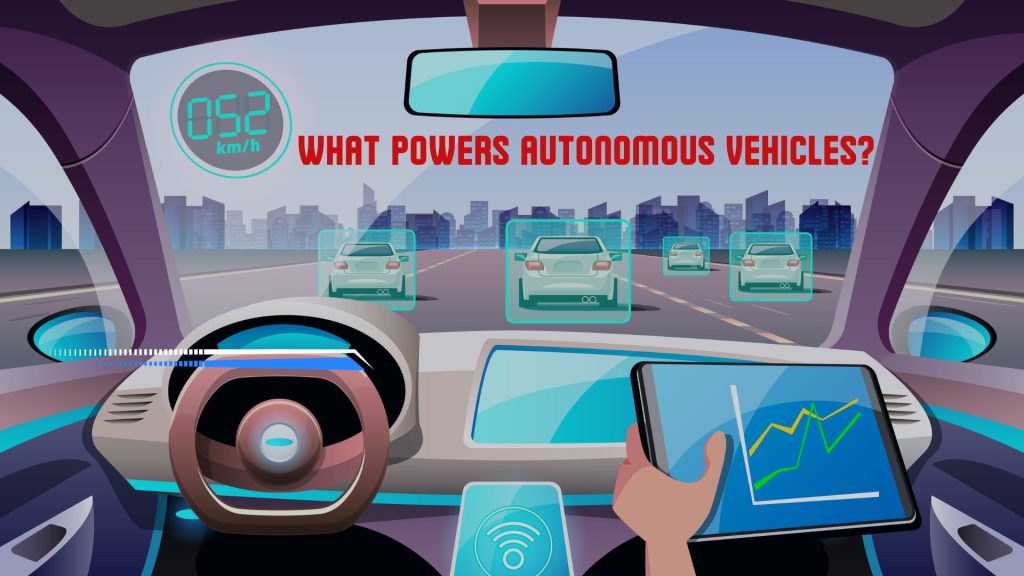
Autonomous vehicles (AVs) process the surrounding environment and interact with it using a combination of sensors, cameras, LiDAR, radar, GPS, and AI algorithms. These systems process huge amounts of data to detect vehicles, forecast their trajectory and make the most informed driving decisions.
There are various degrees of vehicle automation – from driver assistance to full automation (Level 5). More and more, as autonomy grows, needs for high accuracy and diversity of annotated datasets becomes more and more important.
Why Data Annotation Is Critical for Autonomous Vehicles?
Autonomous driving systems are dependent on supervised machine learning and deep learning models, which need to be trained with very well labelled data. Each pedestrian, traffic sign, lane marking, vehicle, cyclist and obstacle should be properly labeled and identified so the AI can recognize similar objects in real-world driving scenarios.
High-quality data annotation helps enable autonomous vehicles to do the following:
- Accurately detect and classify road objects
- To grasp the edges of the lane and road design
- Identify traffic signs and traffic lights
- Monitor vehicles, people and bikes.
- Predict object movement
- Detect unexpected hazards
- Safely move around in complicated environments
- Remove the limitations of decision making due to different weather and light conditions
These AI models rely heavily on the quality, consistency, and diversity of the annotated training data—the quality of this data is directly correlated to the accuracy of the AI model.
Types of Data Annotation Used in Autonomous Vehicle Development
1. Bounding Box Annotation
One of the most popular annotation approaches in autonomous driving is to use bounding boxes. They assist AI systems in detecting and pinpointing objects in frames and images of videos.
The most common objects that are annotated are:
- Cars
- Trucks
- Buses
- Motorcycles
- Bicycles
- Pedestrians
- Traffic Signs
- Traffic Lights
- Animals
- Road Obstacles
The bounding boxes help form the basis for an algorithm that can detect objects in the environment, allowing the vehicle to identify its surroundings in real time.
2. Semantic Segmentation
Semantic segmentation distils all the information in an image into a class label for each pixel, enabling self-driving cars to decipher entire scenes, not just individual objects.
Typical classes include:
- Roads
- Sidewalks
- Buildings
- Vegetation
- Sky
- Lane Markings
- Vehicles
- Pedestrians
- Traffic Islands
This detailed knowledge enables AI systems to differentiate between areas that can be driven through and areas that cannot be driven through.
3. Instance Segmentation
Instance segmentation is different from semantic segmentation in that it segments one instance of an object at a time even in cases where there are multiple instances of the same object.
For instance, each vehicle or pedestrian gets a distinct annotation which helps to track them and avoid collisions.
4. Polygon Annotation
The polygon annotation is more accurate than the rectangle annotation for representing irregularly shaped objects.
It’s frequently employed for:
- Vehicles
- Road Signs
- Construction Zones
- Barriers
- Trees
- Curved Lane Markings
This will render more precise boundaries of objects and hence improve computer vision results.
5. Polyline Annotation
A requirement to map road structures and navigation paths is polyline annotation.
It is used to annotate:
- Lane Boundaries
- Road Edges
- Curbs
- Driving Paths
- Crosswalks
- Parking Lines
Lane detection is a crucial component of lane keeping, lane changing and path planning.
6. 3D Cuboid Annotation
Spatial awareness is a crucial component for autonomous vehicles, and 3D cuboid annotation is essential.
Cuboids give information about:
- Object Position
- Height
- Width
- Depth
- Orientation
- Distance
These annotations assist AI to determine where nearby vehicles and objects are and how they’re moving.
7. LiDAR Annotation
LiDAR sensors produce a million or more 3D point cloud measurements. These point clouds are then used for structured training data through specialized annotation.
LiDAR annotation includes:
- Object Classification
- 3D Cuboids
- Semantic Segmentation
- Instance Segmentation
- Point Cloud Labeling
LiDAR data does not only enable the improvement of the accuracy of perception, especially in low-light situations, but it also brings other advantages.
8. Radar Annotation
When paired with camera and LiDAR data, radar provides accurate distance and speed measurement of objects in weather conditions where cameras and LiDAR are not effective, like in the rain, fog, and snow.
Radar annotation is essential for the integration of various sensor data in AI systems, leading to more accurate perception.
9. Video Annotation
Temporal understanding is a critical issue for autonomous driving.
Video annotation enables:
- Multi-Object Tracking
- Vehicle Tracking
- Pedestrian Tracking
- Cyclist Tracking
- Traffic Flow Analysis
- Driver Behavior Recognition
- Event Detection
The continuous frame by frame annotation trains the AI to learn the movement of objects over time.
10. Keypoint Annotation
Keypoint annotation is a type of annotation that locates specific features on objects.
Examples include:
- Wheel Positions
- Vehicle Corners
- Pedestrian Joints
- Cyclist Body Points
- Driver Hand Position
These annotations are useful to support pose estimation and behavior prediction.
Sensors Used in Autonomous Vehicles
These include:
- RGB Cameras
- Stereo Cameras
- Thermal Cameras
- LiDAR
- Radar
- Ultrasonic Sensors
- GPS
- Inertial Measurement Units (IMUs)
AI systems can make accurate decisions by fusing information from multiple sources, which is known as sensor fusion.
Conclusion
Autonomous vehicles are changing the future of mobility, and the smartness of these vehicles relies on quality annotated data. Data annotation is the backbone that enables the proper perception, navigation and decision making for data, ranging from bounding boxes and semantic segmentation to LiDAR point cloud labelling and multi-object tracking.
An experienced provider of the annotations will provide accurate and extensive and scalable datasets to train the AI models. Tailored for the automotive industry, AI and mobility startups, Annotation Support offers trusted enterprise-grade data annotation services to expedite the development of autonomous vehicles. Be you developing advanced driver assistance systems (ADAS), autonomous delivery vehicles, or a full self-driving platform, high-quality data annotation plays a pivotal role in ensuring safer, smarter, and more reliable mobility solutions.