Annotation Services
- Bounding Box
- Polygon
- 3D LiDAR
- Geospatial
- Line Annotation
- Autonomous Vehicle
- Image Annotation
- Image Masking
- Cuboid Annotation
- Semantic Segmentation
- Video Annotation
- Key Point Annotation
- Text Annotation
- Audio Annotation
- Instance Segmentation
- Data labelling Services
- Image Classification Services
- Image Recognition Services
- Image Processing Services
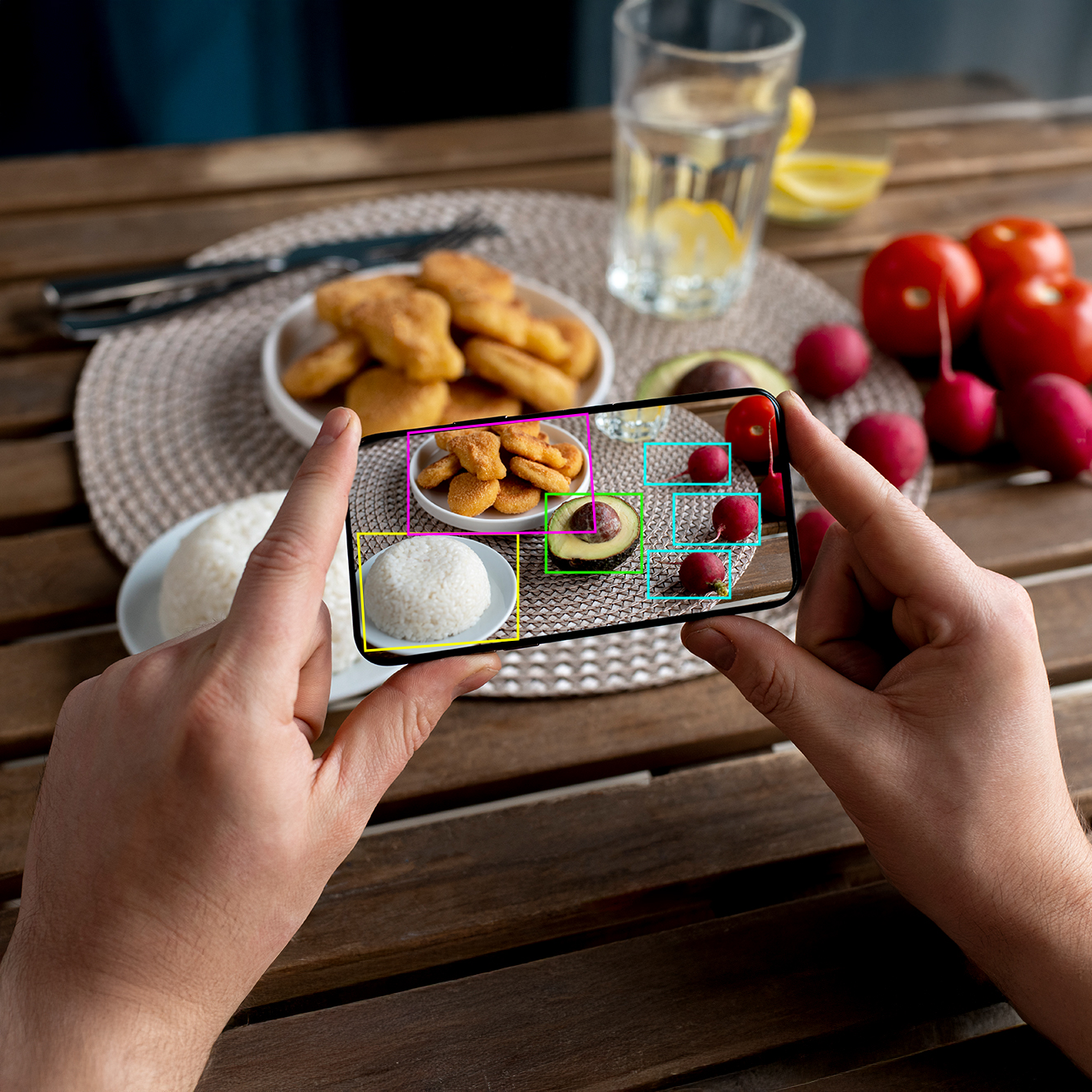
Image Recognition Services
Image recognition is a general area of study under computer vision where the goal is to categorize and describe the contents of an image in order to determine its overall content. It is more complex than the image classification model since it labels the entire images, but it also detects various objects within it. Image recognition is a key to many applications, including facial recognition, self-driving cars, medical imaging and augmented reality.
Steps in Image Recognition:
Data Collection and Preparation: A great deal of data that are labelled is acquired for the purpose of training. In object detection, each object in the image is first identified, and its class is determined and its location described by a bounding box or a segmentation mask.
Data Preprocessing: Images are pre-treated to remove shadows, adjust brightness, and resize images to have a standard format and dimension. Data augmentation can also be done to generate a large variety of training data sets.
Model Training: Objects or features of interest are identified using deep learning architectures (mainly CNNs) whereby models are trained to make the correct prediction that is, either the same as the actual label or close to it.
Object Detection and Recognition: In inference, the model takes the input images as an input and detects the objects in the images with their class and position.
Image Recognition use cases:
Facial Recognition: Annotation support uses Image recognition technology to identify and classify one face from a picture or a video. It has its application in security, biometric identification such as face unlocking and social media platforms like automatic tagging.
Autonomous Vehicles: Image recognition models objects on the road which include pedestrians, vehicles, signs and other barriers to allow the self-driving cars to make decisions.
Medical Imaging: Our custom image recognition service is applied to detect abnormalities such as tumours or other diseases, fractures in X-ray, CT or MRI images for diagnostic purposes.
Retail and E-commerce: Our Retail Image recognition is applied to sort products, provide visual search (to find products that look like the one the customer has uploaded), and offer individualized recommendations to the customers.
Agriculture: Identifies diseases and pests of plants, as well as overall plant health and condition in images of plants or aerial photographs of farms, which will allow farmers to better manage crops.
Security and Surveillance: Observes public or restricted zones for possible threats or threats carrying weapons, or for certain individuals.
Augmented Reality (AR): Captures real-environment features to display additional information, for example, maps, three-dimensional models, or game items in the AR apps.
Frequently Asked Questions
Find answers to the most commonly asked questions about our annotation services.