Case Studies
- Supporting Universities and Research Institutes in USA, Denmark and UAE for their AI researches through our Annotation services
- Polygon annotations to AI companies in Sweden, Singapore and USA
- Point cloud / 3D LiDAR annotations to AI companies in USA, Germany and Japan
- How Annotation Support Helped a Recycling Company Improve Waste Sorting Accuracy?
- Annotation support to a Research Institution to improve people mobility
- Annotation services to an Aqua culture farm
Introduction
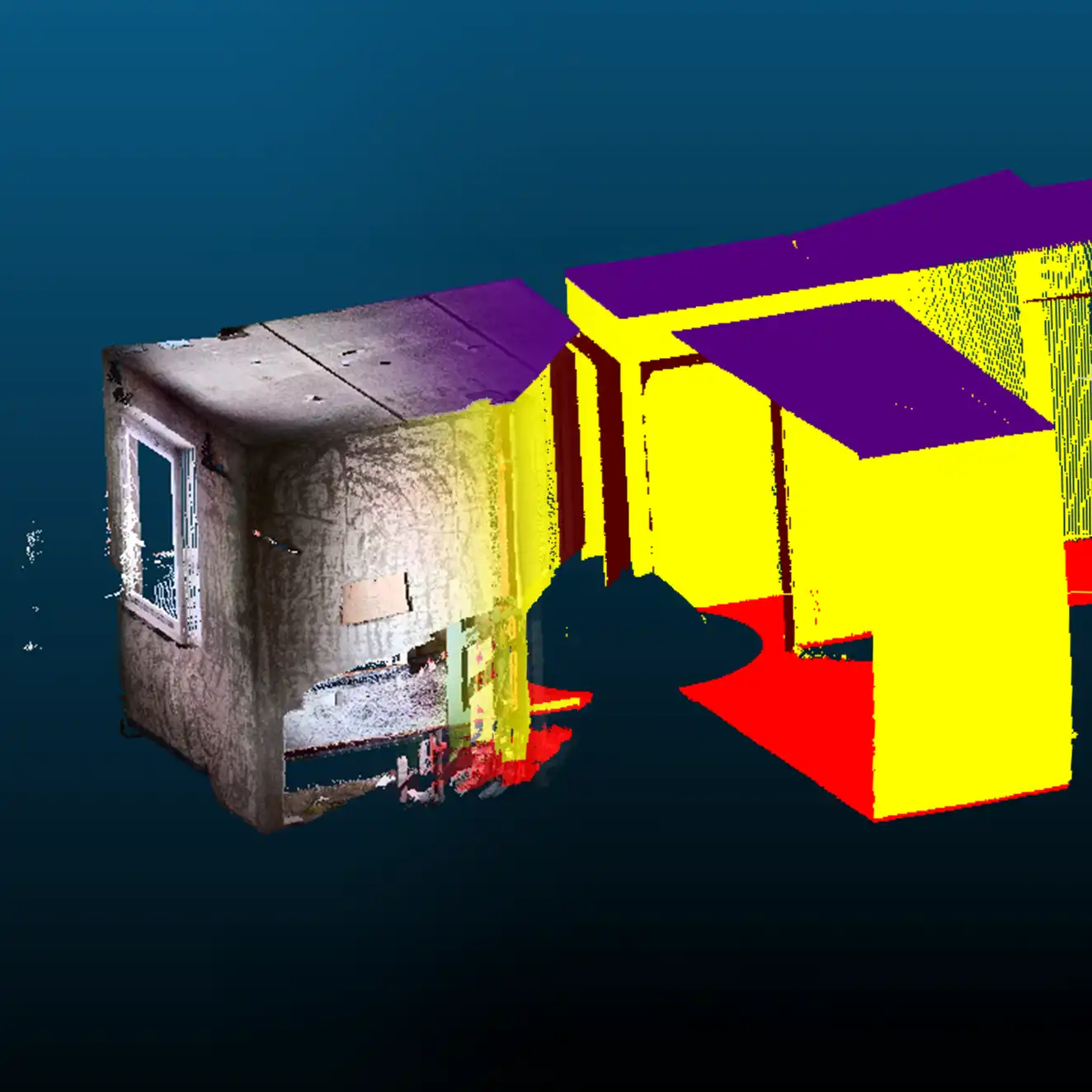
Annotation Support collaborated with leading autonomous technology and AI companies across the United States, Germany, and Japan to deliver high-precision 3D LiDAR point cloud annotation services. The goal was to convert raw sensor data into structured, labeled datasets for machine learning, deep learning, and perception model training.
These datasets were used in autonomous vehicles, robotics navigation, industrial automation, and smart mobility systems.
About the Dataset
The project required multi-sensor data which were highly complicated, such as:
- Electronic 3D LiDAR point cloud scans from autonomous vehicles.
- Reads multiple frames sequentially from an environment.
- Urban, highway, and industrial traffic scenarios.
- Multi-sensor fusion data (LiDAR camera alignment inputs).
- Traffic dynamics involving moving bikes, people, and cars.
The dataset required advanced 3D annotation expertise for accurate labeling and interpretation.
Challenge
The client organizations had a number of technical and operational issues to deal with:
- Millions of data points in each scan requiring high-density point cloud processing.
- Identifying overlapping objects in complex scenes with low visibility and occlusion.
- Requirement for accurate 3D bounding boxes, orientation, and scale measurements.
- Maintaining annotation consistency across multiple annotators and project regions.
- Ensuring temporal consistency across sequential LiDAR frames.
- Meeting tight delivery timelines for AI model development and deployment.
Inaccuracies in annotations can have a tremendous affect on the accuracy and safety of the autonomous system.
Our Solution
Annotation Support has developed a comprehensive, multi-layer 3D annotation pipeline for high precision autonomous training of AI.
Core Annotation Services
- Precise orientation, depth, and size information through 3D bounding box annotation.
- Semantic segmentation of point clouds for environment understanding.
- Object classification (cars, trucks, pedestrians, cyclists, etc.).
- Sequence tracking with frame-by-frame motion tracking across consecutive scenes.
- Lane, road, and drivable space detection in 3D environments.
- Handling partially visible and occluded objects accurately.
Advanced Workflow Design
We added the following to ensure information accuracy and scalability:
- Structured Annotation Guidelines specialized for datasets for autonomous driving.
- Calibration-aware process for the alignment of the LiDAR sensor.
- The use of AI for pre-labeling for increased speed and consistency.
- Multi-stage review system (Annotator → QA → Expert).
- Strategies used to handle extreme traffic and weather conditions.
- Ongoing feedback loops with client ML engineering teams.
Quality Assurance Approach
An important consideration was quality, as autonomous systems are safety critical. Our QA process consisted of:
- Random selection of decorated frames for accuracy check at completion
- The consistency of the coding through cross-annotator validation.
- Position, rotation and scale (3D spatial error checks).
- Inter-sequence consistency reviews for datasets.
- Model performance (based on data from iteration) and iterative refinement.
To guarantee the final dataset was dependable for high performance AI training.
Results
The partnership resulted in meaningful measurable outcomes such as:
- Accurately annotated 3D bounding boxes at 95%+ accuracy
- Manually loaded and processed millions of LiDAR points in multi-region datasets.
- Shrunk the total time for annotting by 35-45%
- Enhances the performance of object detection and tracking in client models.It enhances performance on object detection and tracking for client models.
- Stabilization of models in complex real-world driving situations
- Made autonomous AS development more streamlined
Business Impact
The annotated datasets played a critical role in advancing AI systems across:
- Autonomous driving perception and decision-making
- Robotics navigation in indoor and outdoor environments
- Smart city mobility and traffic intelligence systems
- Industrial automation and warehouse robotics
- Advanced Driver Assistance Systems (ADAS) development
By outsourcing complex 3D annotation tasks, clients were able to significantly reduce development bottlenecks and accelerate product readiness.
Why Clients Choose Annotation Support?
- Expertise in complex 3D LiDAR annotation workflows
- Scalable annotation teams for large datasets
- High precision for safety-critical AI systems
- Global experience across USA, Germany, and Japan
- Efficient data management and delivery systems
- Flexible engagement models for AI projects
Conclusion
It has been Annotation Support's privilege and achievement to provide advanced 3D LiDAR, point cloud and annotation services for Autonomous AI Companies in the USA, Germany, and Japan, who want to create safer, more accurate and highly intelligent autonomous systems. Our expertise assures that raw sensor data turn into high quality training datasets that assist in shaping the future of autonomous mobility and robotics innovation.